Beyond Acceptance: Reclaiming Who We Are
Beyond Acceptance: Reclaiming Who We Are
We're taught, by default, to see disability as something to be ashamed of — something wrong, something lesser, something a good life happens despite. I don't want to deny the hard parts. They're real. But I don't want to let the hard parts be the whole story either, because there's something else true alongside them, and it rarely gets said out loud.
There's a concept I've come to love for naming that other thing: re-appraisal.
Re-appraisal isn't the same as acceptance. Acceptance, clinically, is genuinely useful — especially where nothing can change. Acceptance and Commitment Therapy describes it as making room for pain rather than fighting it, freeing energy for what you value (Hayes, Strosahl, & Wilson, 2012). In spinal cord injury specifically, greater acceptance is consistently linked to better quality of life and mental health (Aaby, Ravn, Kasch, & Andersen, 2020). That's real, and it matters.
For me, re-appraisal goes a step further. Acceptance lets go of the negative emotions attached to what changed. Re-appraisal asks a different question: what did this role actually mean to me, underneath how I used to perform it — and how do I perform it now, fully, as myself? It's reclaiming what disability means, on your own terms, instead of letting others, or your own old beliefs, define it for you — a genuinely positive assessment of your own disability (Byra, Mroz, & Kaleta, 2020), built on top of acceptance rather than instead of it.
Re-Appraisal of my mothering role
I know this one from the inside, through parenting.
For a long time, I thought that if I couldn't physically keep up with my son the way other parents could, I wasn't fully a mother. That was a real loss, and it took time to name it as one.
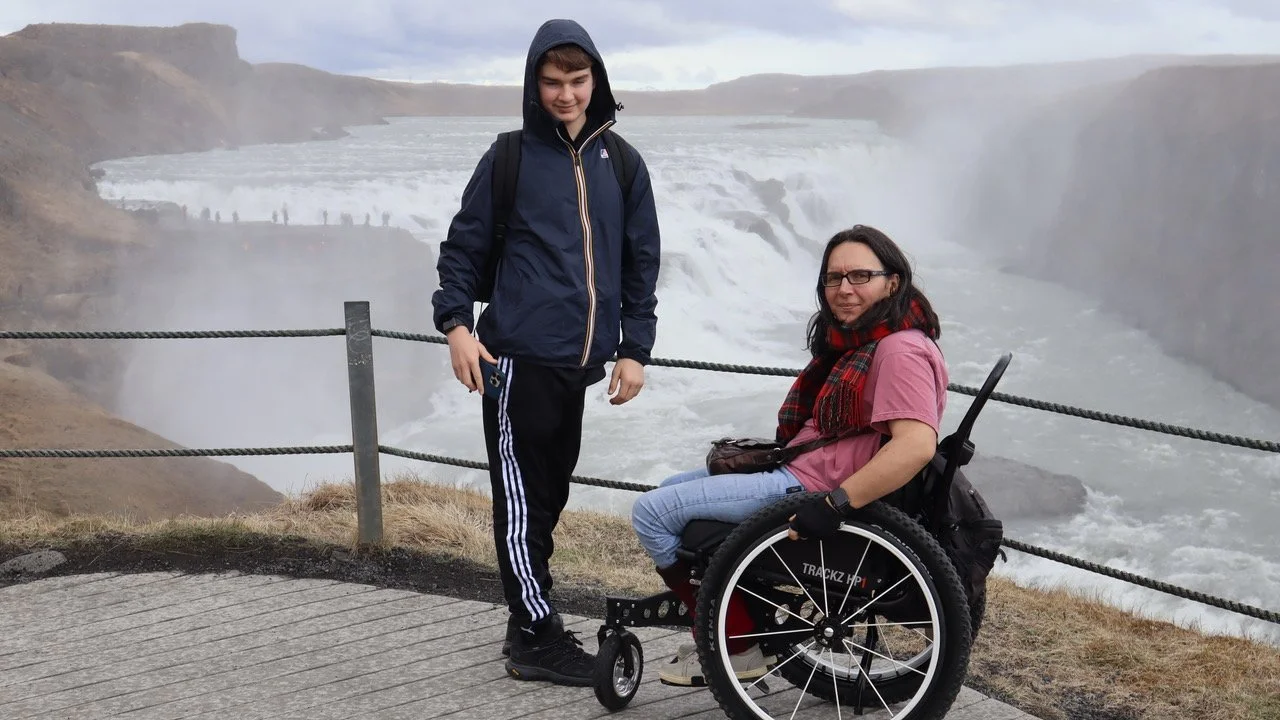
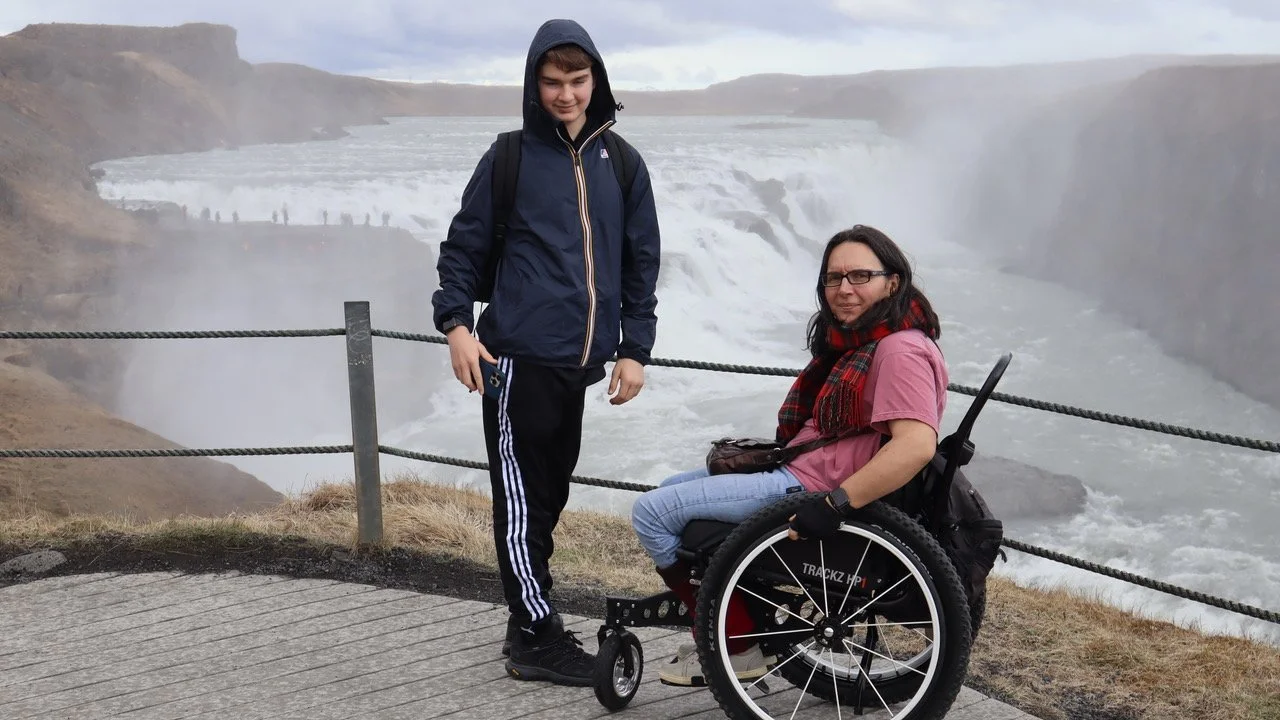
Slowly, I stopped measuring motherhood by what my body could do and started measuring it by what I could still give: presence, emotional support, helping him find his own way through hard things. I learned I could show him how to kick a soccer ball, using my hands, my words and by showing him using his foot. I could certainly teach him about how we adapt, by being flexible and strong, as we travelled in different countries. I showed him that Life can be full of wonderful experiences that we get to share with others.
My disability didn't just cost me something — it made me more creative and more curious than I might otherwise have been. My son and I learned, together, to find solutions to problems neither of us expected. And somewhere in watching me do that, he built his own compassion for other people's struggles — he's sixteen now, and already fights for social justice, in a way I don't think would have happened if our family's path had looked more ordinary.
Re-Appraisal in a fashion show
I heard another example of this recently, listening to Camille Chai talk about walking in a fashion show for Fondation Réa. She described being moved just to be there — and then, as she put it, having to re-adjust her thinking. She didn't need to walk like a two-legged top model. She only needed to walk the way she actually walks. That's it.
That shift — from performing someone else's version of the role to inhabiting her own — is re-appraisal in exactly the shape I mean it. Not proving she belonged on that runway by imitating it, but redefining what belonging on it could look like, with her own body, her own gait, her own pride.
In doing that publicly, she handed something to every younger girl watching: proof that you don't have to be like everyone else to be beautiful, or to be proud of who you are. I'm looking forward to exploring this further with her directly — we're talking about re-appraisal together on Ça me regarde, AMI-télé.
What can we learn from it
That's the pattern in both stories: the role stays the same in name — mother, model — but how you inhabit it gets rebuilt from the ground up, on your own terms.
If you're in the middle of this yourself, a few places to start:
Give yourself real time to name what's actually changed, without rushing toward the silver lining. Psychologists call this deliberate rumination, and it's not the same as dwelling.
Ask what in you hasn't changed — your values, your core strengths. That's the anchor the new version gets built on.
Redefine the role on your own terms. Not by asking how you used to do it, but how you want to do it now, with what you actually have.
Find somewhere concrete to practice it — sport, a creative project, volunteering. The new identity tends to become real through action, not just reflection.
None of this erases what's hard.
What it does is help you understand what's most meaningful to you — what truly represents you at the core, underneath the role you used to perform and the one you're building now.
That's not a consolation prize for what disability took. It's just also true, sitting right alongside the hard part, not instead of it.
References
Aaby, A., Ravn, S. L., Kasch, H., & Andersen, T. E. (2020). The associations of acceptance with quality of life and mental health following spinal cord injury: A systematic review. Spinal Cord, 58(2), 130–148. https://doi.org/10.1038/s41393-019-0379-9
Byra, S., Mroz, J., & Kaleta, K. (2020). Forgiveness and acceptance of disability in people with traumatic spinal cord injury — the mediating role of disability appraisal: A cross-sectional study. Spinal Cord, 58, 1317–1324. https://doi.org/10.1038/s41393-020-0507-6
Hayes, S. C., Strosahl, K. D., & Wilson, K. G. (2012). Acceptance and commitment therapy: The process and practice of mindful change (2nd ed.). Guilford Press.

written by
Marjorie Aunos, PhD., is an internationally renowned researcher, adjunct professor, clinical psychologist, and award-winning inspirational speaker from Montreal, Canada.
Recent Blog